I’ll be totally honest. I can’t tell you exactly what a smart home would cost you. There are simply too many variables. What I can do is break down the process, identify the elements that determine the cost of your project, and share the real ranges we see across our own installations. This will give you a better sense of the type of smart home you may want to pursue.
It’s important to distinguish a professionally integrated home automation system from the many DIY options that let you control certain aspects of your home and make it “smart.” Smart thermostats, app-controlled bulbs, and self-monitored cameras each cost a few hundred dollars and deliver real convenience on their own. If you’re not seeking a fully integrated system, those may be all you need.
The trade-off is that a piecemeal wireless system means a separate app for every function, gets harder to maintain as it grows, and leans on your home network without anyone managing it. The upside: should you decide to move, your gadgets move with you.
Then there is a home automation system, or smart home.
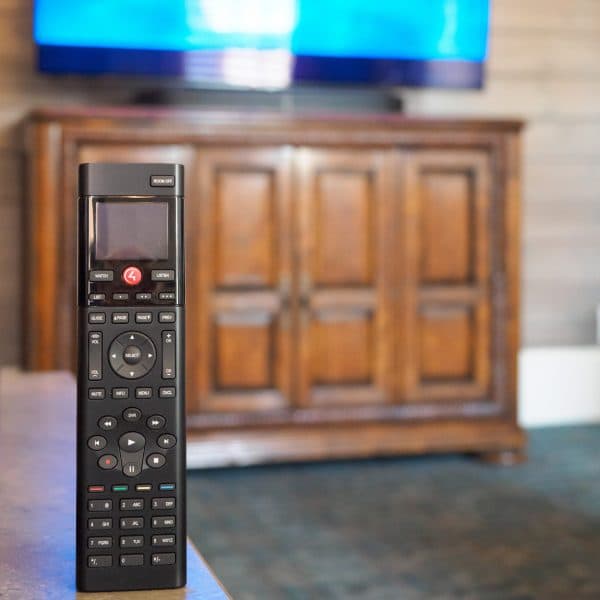
Go this route and your system is engineered as one: lighting, climate, shades, security, networking, and entertainment on a hardwired backbone, controlled from a single interface. You can’t take it with you if you move, but it adds real value to your home when you sell. It is this type of smart home that I’ll dissect.
So let’s look at where your costs come from. We can break it down into a few key areas: equipment, engineering, and installation. Ongoing care matters too — that’s what our Smart Care remote monitoring covers — but for now let’s focus on the initial installation of your system.
Equipment
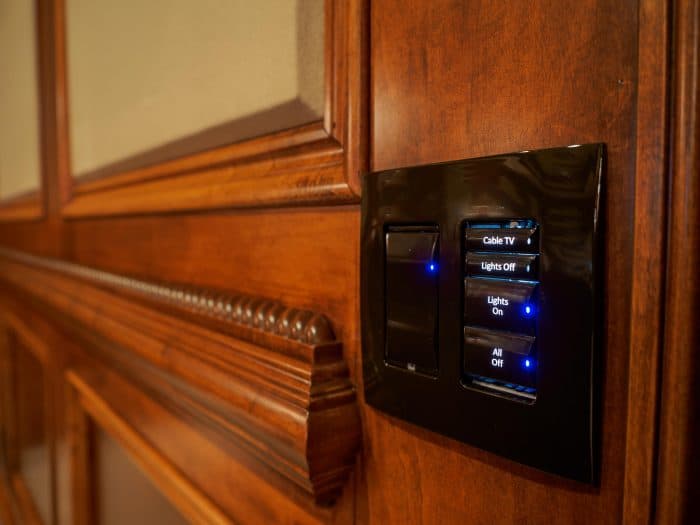
A smart home generally consists of lighting, comfort, security, networking, and entertainment — and all of it requires equipment. A per-room estimate doesn’t make sense here, because some devices serve a single room (a lighting keypad) while others serve the whole house (the central processor, the network). As a real-world starting point: entry-level integrated lighting and climate control typically lands around $10K–$15K, and full-home automation — shades, security, audio, and climate throughout — generally ranges from $30K–$100K+ depending on the size of the home and the scope of the system.
Individual subsystems follow their own ranges. A four-zone whole-home audio system starts around $5K–$10K. A robust home network — the foundation everything else rides on — runs about $3K–$5K for an enterprise Wi-Fi upgrade, or $8K–$25K+ for full structured wiring with a rack build. And a dedicated home theater is its own project, starting around $25K.
Engineering
Think of the engineering of your system as you would a custom car. Someone has to design a unique item, made to your specifications, and ensure that all the parts work together properly when you drive away. Everything hinges on this vital step: the engineer makes every component talk to every other component and function seamlessly. A smaller job may only require a few hours of engineering; a large, complex system takes considerably more, and it’s billed accordingly. This is what separates a system that simply works from a box of expensive parts.
Installation
Installation is performed by certified technicians, billed hourly per installer, and scales with the size and scope of your project. A focused upgrade can happen in a matter of days, while a system that touches every room of the house will likely take several weeks.
Pro Tip: If you’re undecided on making your entire home “smart,” you can have your installer pre-wire your whole home at the outset so that you can easily add on to your system at a later date.
I may not be able to tell you exactly how much a smart home will cost, but hopefully this breakdown helps you understand where the money goes. When you’re ready for a number specific to your home, talk to us — we’ve been designing and installing these systems in Chattanooga since 2002, and an exact answer starts with a conversation.